The Columbia Generating
Station (CGS),
formerly
known as WPPSS Nuclear Plant #2, is:
|
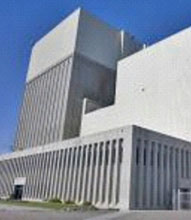
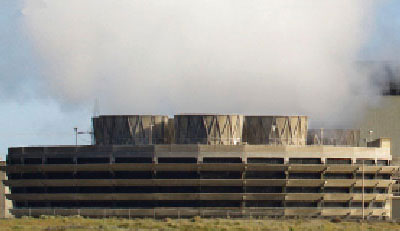
Hanford, Washington
elevated spent fuel pool |
Dangerous,
because this nuclear reactor is of a design
similar to the Fukushima plants, which were
destroyed in the aftermath of an earthquake
and tsunami in 2011.
The
reactor's
flawed
design
is
vulnerable
to
catastrophic
radiation
releases.
It is a
GE Mark
II
Boiling
Water
Reactor
similar
to the
four
Fukushima
plants
that
experienced
catastrophic
failures
in Japan
last
year.
Its
elevated
spent
fuel
pool,
inadequately
reinforced,
is
identical
to one
that
nearly
collapsed
at
Fukushima
#4 and
still
threatens
Japan
and the
North
Pacific
with
further
massive
release
of
radioactive
material.
|
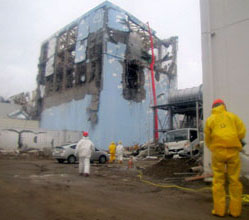
Fukushima, Japan
(former) elevated spent fuel pool |
The
reactor
has the
potential
to
suffer
hydrogen
explosions. The
CGS
nuclear
plant
also
shares
the
potential
problem
of
improper
venting
that
caused
hydrogen
explosions
at three
of the
Fukushima
reactors
when
they
lost
their
coolant.
Energy
Northwest
plans to
install
vents,
but
without
filters
to block
the
release
of
radioactive
materials
during
an
accident.
Furthermore, the
reactor is: |
|
Too expensive. A recent
economic study demonstrates that
electricity users would save $1.7 billion over the next 20 years
if the plant were to be shut down now. The cost of electricity
produced is above its market value.
“Aside from the inherent dangers embedded in
nuclear power, the economics of CGS no longer
makes sense. The plant should be displaced.” Economic
Analysis of the Columbia Generating Station,
by McCullough Research, 2013 |
 |
We
don't need the power from this nuclear plant.
According to
Washington Department of Commerce figures
(download
Excel spreadsheet), the
plant has produced 4% to 6% of the
electricity used in Washington annually since
2001 – and in 2011, due to a
six-month shut down for repairs, it produced
2.6%. Energy conservation alone could make
up the difference, and wind and solar energy are
also viable substitutes. |
The consortium that operates the nuclear
plant goes by the sanitized name Energy Northwest. It was
previously known as the Washington Public Power Supply System
(WPPSS, pronounced "Whoops.") WPPSS attempted to build five
nuclear power plants in the late 1970s and early 1980s. Two of
the projects went bankrupt, and two more were abandoned as
unaffordable, billions of dollars over budget. (Read the history
here.) Regional
electricity users are still paying off the debt for those two
abandoned plants, which never produced a single kilowatt hour of
electricity.
|
CLOSING THE
PLANT
Mechanisms by
which the plant can be closed:
-
Ordered by BPA: According to the 1971 Project Agreement,
section 15(c), that governs the ownership and operation of CGS, the Administrator of the
Bonneville Power Authority(BPA)
has the power to direct the termination of CGS.
-
By the
Participants' Review Board, composed of nine members representing the 92
utilities participating in the Columbia Generating Station.
This board reviews all Columbia purchases over $500,000, nuclear
construction and Columbia annual budgets, fuel management
plans and plans for refinancing.
-
By vote of
the Board of Energy Northwest.
|
What you can do:
The Seattle City Council
passed a resolution instructing Seattle City Light to take a
hard look at the operation of the Columbia Generating Station
nuclear power plant (WPPSS-2). May 31, 2016
Write to your public utility.
If your electric public
utility is a member of Energy Northwest, write to the utility's
board (for PUDs) or the mayor and city council (for municipal
utilities) and ask that they use their position as plant owners
to call for Energy Northwest to shut down the plant. Mention the
leadership Seattle has shown (above).
See a
list of utilities with
an ownership share, and contact information.
After you have written,
follow up with phone calls.
Write to your local
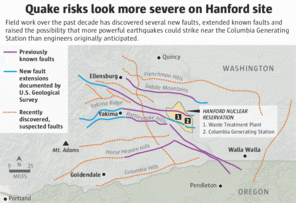
newspaper, discussing the economic, earthquake, and plant design
issues.
Contact the Bonneville Power
Administration (BPA), which by contract buys and resells all
power produced by the nuclear plant.
Join our
campaign:
Contact us
for volunteer opportunities and to let us know how you would
like to participate.
|
Nuclear decommissioning costs rising worldwide
Decommissioning cost estimates have outpaced inflation fourfold since 1988. It will be cheaper to do it now than to wait.
(Bloomberg News, 4/25/2016)
More
on nuclear reactor decommissioning |